
A place every visitor should see, regardless of their beliefs or religion.
I've always been curious about the inside of cathedrals and churches. I think they're places where you can observe different forms of artistic expression and learn a little more about European religious architecture. From a personal point of view, they're also spaces to pause, breathe and think about the things we're going through at that moment in our lives.
That's why, ever since I moved to Oslo, I wanted to come and see it — to discover a little more of the city's history. What I ended up finding was far more than that: a place where I felt genuinely at peace, calm, a refuge from the chaos of the new life I had arrived to. Oslo Cathedral, the third cathedral in the city, is a historic jewel surrounded by commerce and modern buildings. It was completed in 1697 and belongs to the Protestant Evangelical Lutheran Church of Norway. It was previously known as Our Saviour's Church.
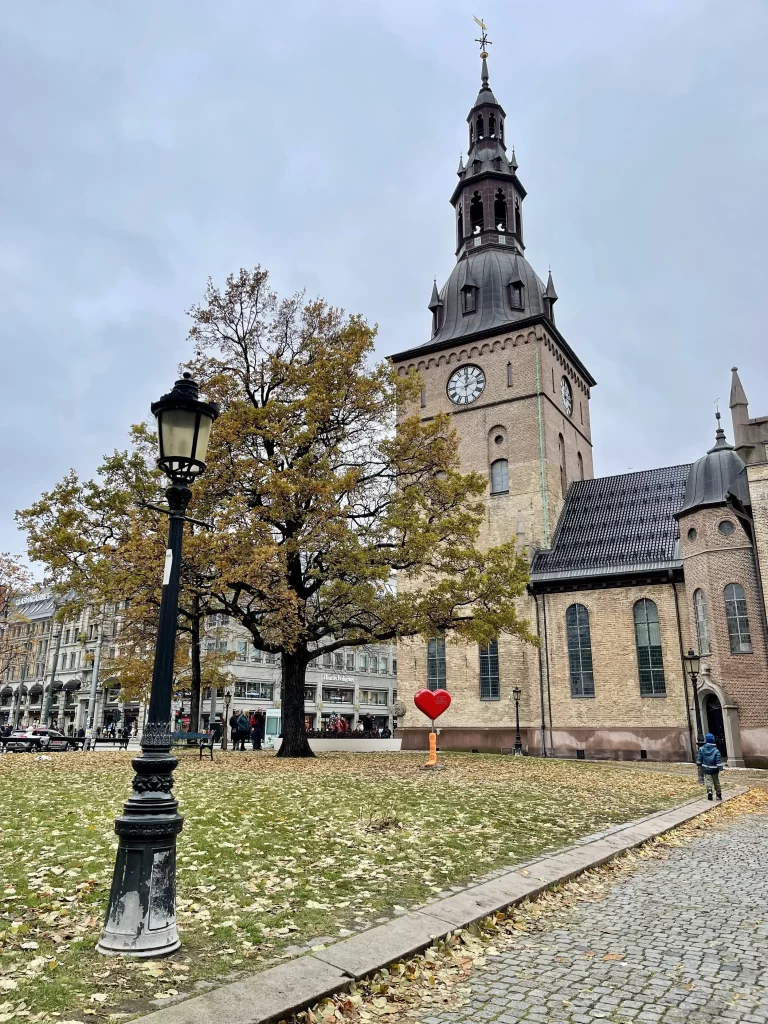
The first time I visited was completely by accident. I was walking along Karl Johans gate, trying to explore the city centre on my own, and just before I reached the tram stop I spotted the cathedral in the distance — and something told me it was time to go in. Standing just a few metres away I could already feel the grandeur of the building, and right in front of the entrance the doors caught my eye. As I looked more closely I could see they were carved with what appeared to be religious scenes — and that's when I decided to go inside and learn more about the history of this place.
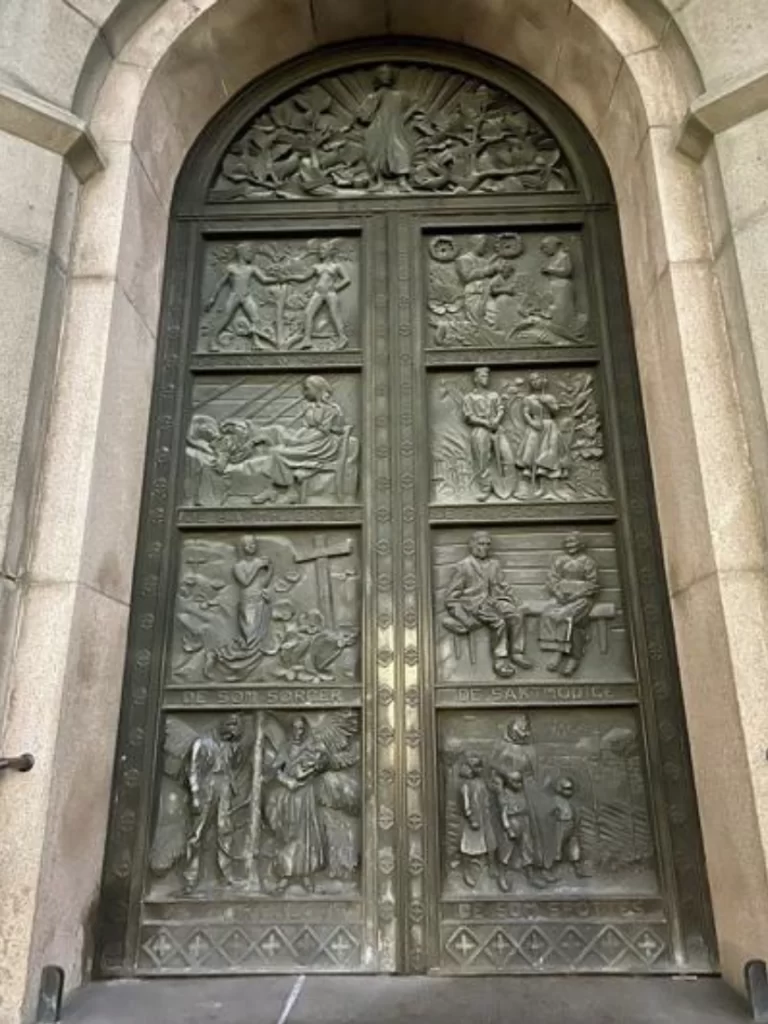
Inside there was a book telling the history of the cathedral — in Norwegian, so my faithful companion Google Translate helped me photograph and decode each page. A slightly strange moment for the people walking past, since for several minutes I stood there photographing this book trying to figure out what was on the doors.
I eventually found a section explaining that the doors illustrate the Beatitudes written in the Bible — people who, to my complete surprise, were not doing anything heroic or majestic, but rather reflecting everyday life. A deliberate choice, made so that ordinary people would feel more connected to and welcomed by the church.
All of that happened before I had even stepped inside, because there was another door — made of glass and wood, a more familiar design to me. I walked in and immediately noticed a very strong smell of wood. You could feel that this place was part of the living history of the city — something very characteristic of the old houses and buildings I've visited here. The energy I felt made my whole attitude shift. It's somewhat intimidating because you have to be quiet, but at the same time pleasant because there's a sense of serenity all around you.
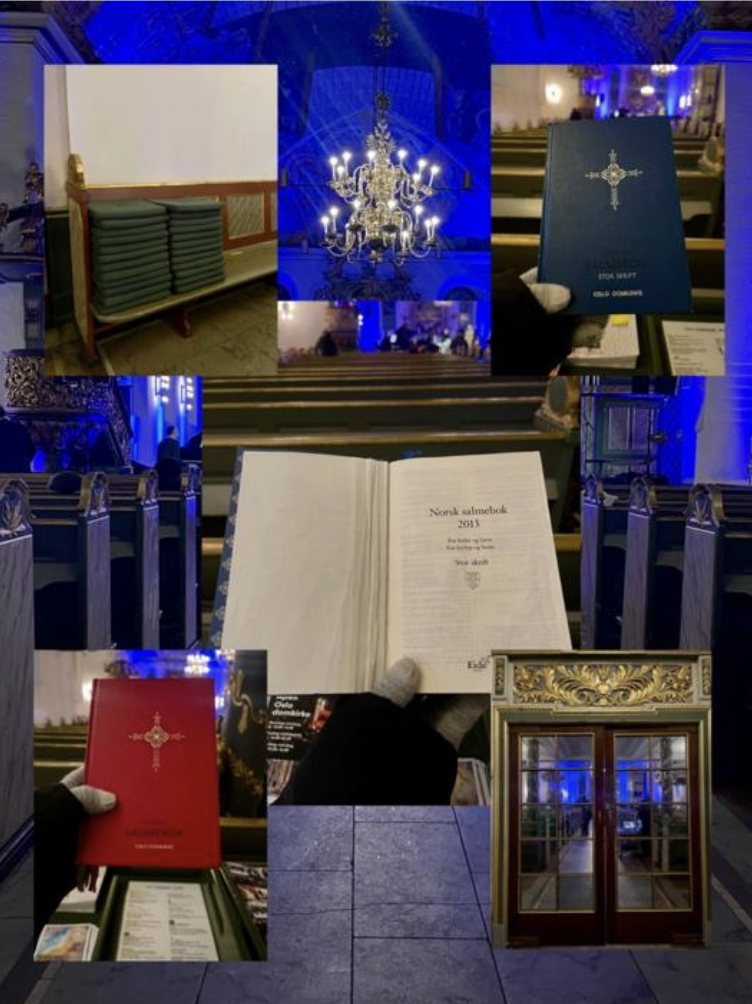
Once inside, I noticed a shelf with many books — copies of the New Testament, which in Norwegian is written "Norsk salmebok." The red ones are in regular print and the blue ones in larger text. There were also cushions, something I had never seen in a church before — I suppose they're there for comfort. I decided to keep walking and sit down in a chair.
Without a doubt, the most astonishing thing is all the art on the ceiling. I found it fascinating to see that the painting depicted different religious scenes — illustrations very different from what I've seen in traditional Catholic churches. In the centre you can see a very bright sun with the inscription "Gloria in excelsis Deo", meaning "Glory to God in the Highest.".According to the description of this painting, the sun represents a direct relationship between the Creator and everything in the Universe. This concept left me completely fascinated. Another thing that left me speechless was that this great work of art was created by a Norwegian artist named Hugo Lous Mohr less than 100 years ago — it was completed in 1950.
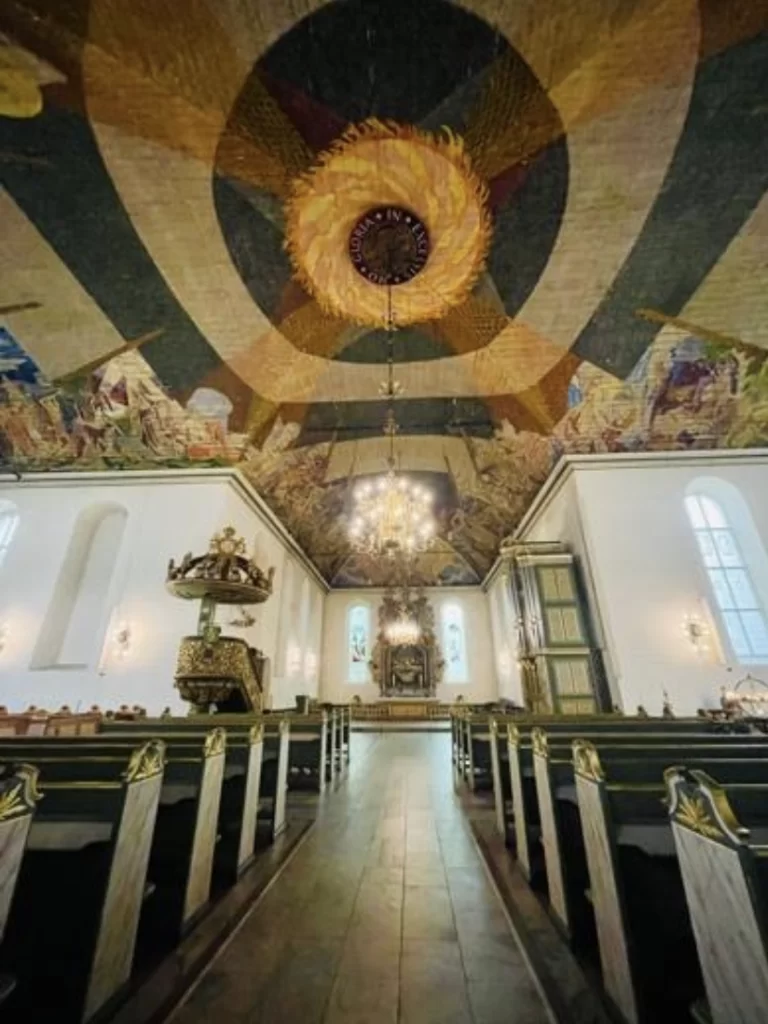
I stood there contemplating the painting and taking in every detail. After a while I began walking towards the right side of the cathedral and found a door — closed to the public, authorised access only. According to the book at the entrance, the one that had told me about the doors, I also learned that the basement houses a funeral crypt. This place, more than a cathedral, is full of history and things I never imagined I'd discover. The crypt was originally built for 42 individual tombs and 4 double ones — but those numbers ended up doubling, as it became a highly sought-after burial site. There's an old belief in Nordic countries that hell lay to the north, which is why the most desirable burial spots faced south and came at a higher price. The first person buried in the crypt was Deputy Governor Just Hoeg in 1694, a key promoter of the cathedral's construction — and as a gesture of gratitude, he was given the best burial spot on the south side.
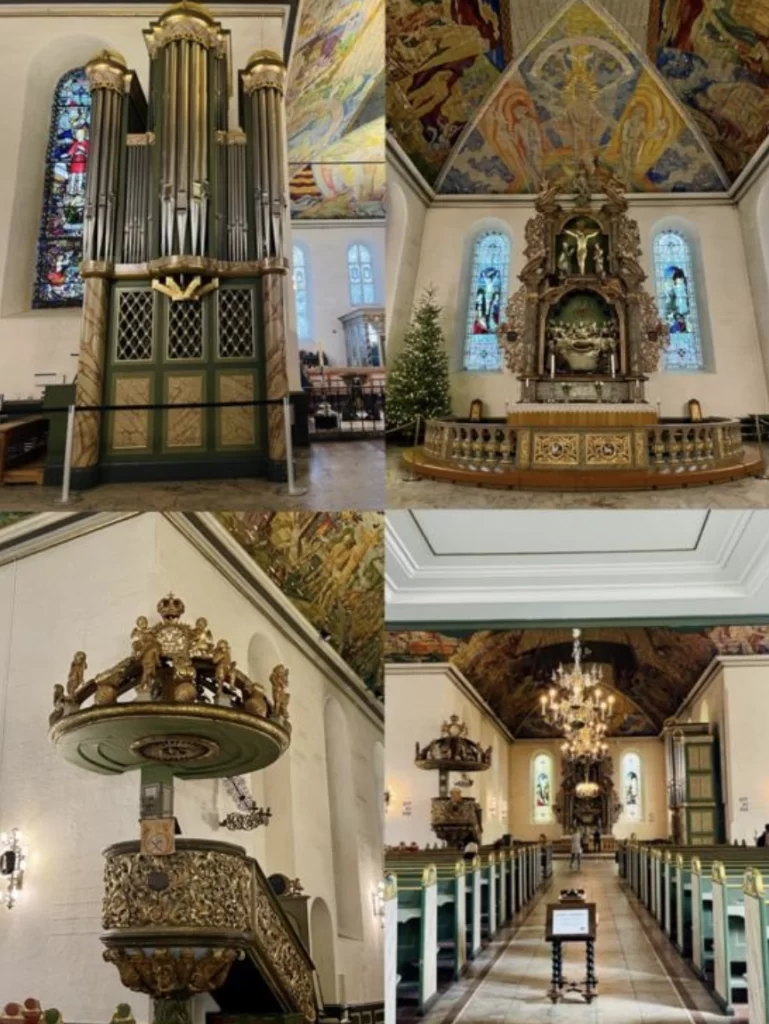
I walked through the entire interior, taking photos of the ceiling, the organ, the pulpit, the altar and everything around me. Reading a little more about the history, I found that when construction was completed in 1697, the citizens were not happy with the design — they said the tower was too low and not worthy of a cathedral. What's interesting is that even today, the cathedral tower is the highest point of any building in that area. So I decided to look at it more carefully from outside, walked around it and crossed the street to get a better angle. You can clearly see where a section was added to the clock tower by the difference in brick colour — an addition made 150 years after the original build.
Your last hour in Oslo — make it count
After the tour you have plenty of time to explore on your own with the Local Secrets Guide in hand. Eat where locals eat, grab a coffee at one of the best cafés in the city and get back to the ship with stories to tell.
Oslo in 6 hours. No stress. Not a minute wasted.